
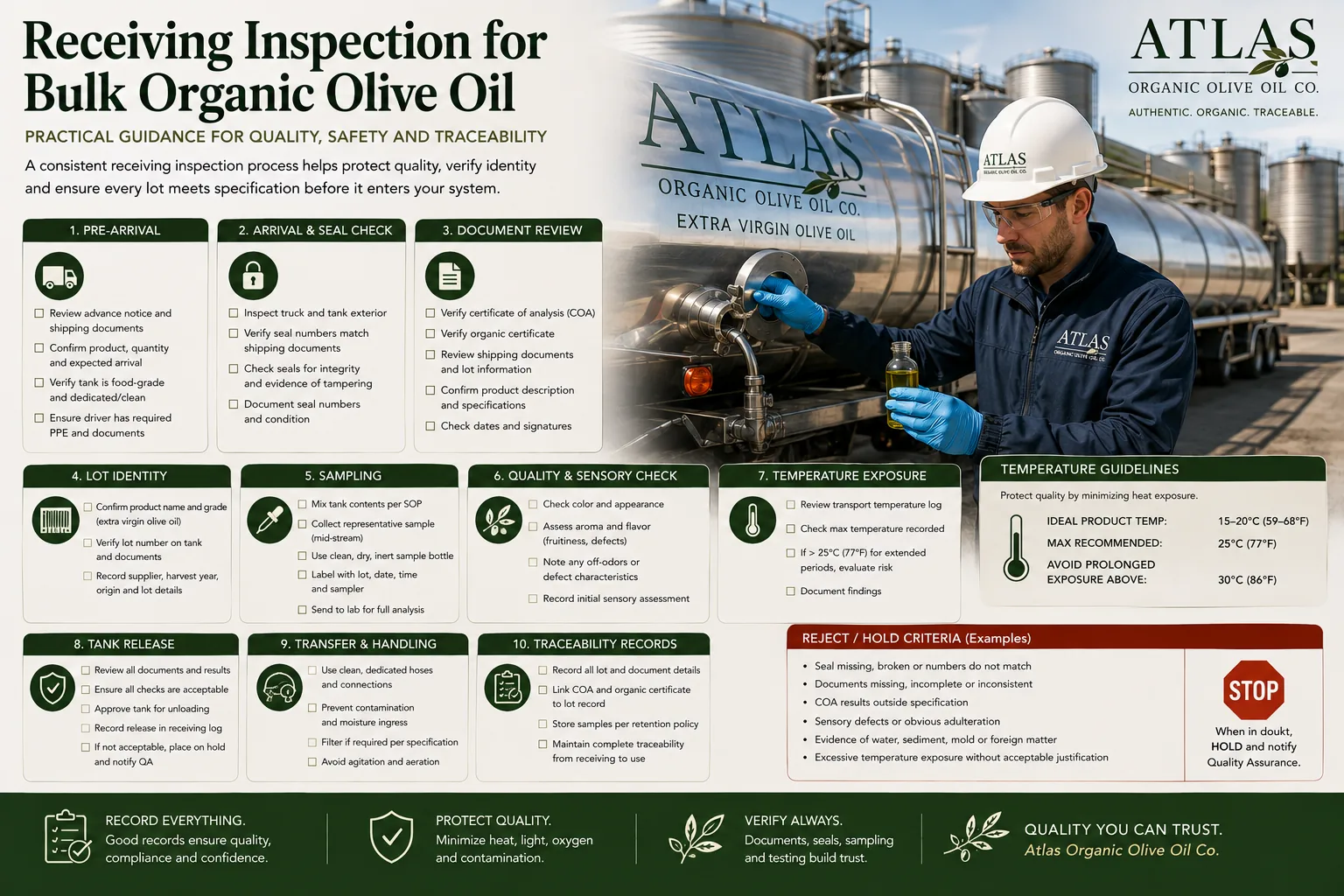
Receiving is the last chance to catch shipping damage, identity errors and obvious quality problems before oil enters a plant tank. A short, repeatable checklist protects both quality and traceability and helps prevent an unapproved lot from becoming mixed with released stock.
Analytical numbers are meaningful only in context: lot identity, sampling, method, category standard, sensory condition and storage history all matter. A certificate of analysis is valuable only when it can be tied confidently to the material at the receiving point. For bulk programs, seal integrity, transport condition and the transfer path into storage are therefore part of the same quality-control decision.
The practical objective is not to find an abstract “best” oil. It is to define the oil, documentation, receiving procedure and handling system that remain fit for the intended food, channel and shelf life. Receiving controls should be simple enough to perform consistently but strong enough to stop questionable material before it enters the plant's normal inventory.
1. Start with the decision framework
Before requesting samples, write down the commercial job the oil must perform. That brief should state the finished product or service application, target market, annual and trial volumes, expected pack or bulk format, sensory role, process exposure, storage conditions and required organic documentation. If the oil will be named prominently on the label, the sensory target deserves even more attention.
Add the receiving decision to the same brief. Define what must be verified before unloading, which observations trigger a hold, where samples will be taken and who has authority to release the lot. A receiving operator should not need to improvise when seal numbers do not match, documents are missing or the load shows signs of leakage or unusual exposure.
- Verify seal numbers, lot codes, organic identification, quantity and shipping documents before unloading.
- Confirm that the vehicle, tanker, flexitank, IBC or other bulk format matches the approved purchase and shipment details.
- Inspect container integrity and note unusual temperature exposure, leakage, odors, damaged fittings or contamination concerns.
- Sample according to a documented plan that identifies the lot and protects the integrity of the sample.
- Retain a reference sample where required and release the lot against agreed analytical, sensory and documentary criteria.
A useful specification separates the legal or category baseline from tighter internal targets. It also makes clear which values are guaranteed at release, which are typical, and which are only reference data from a particular origin or harvest. Receiving procedures should mirror that logic by distinguishing mandatory rejection criteria from observations that require investigation or additional approval.
2. Practical workflow
Move from supplier approval to physical receipt in controlled steps. First, compare the arriving shipment with the purchase order and pre-shipment documents. Second, verify seals, identification and container condition before any connection is made. Third, take representative samples using the approved procedure. Finally, release or hold the load before it is mixed with other plant inventory.
- Write a one-page brief. Include category, organic status, harvest or filtration preference if relevant, sensory profile, bulk format, volume, destination, expected receiving documents and timing.
- Verify identity before connection. Match supplier name, purchase order, lot number, seal number, quantity, organic identification and vehicle or container details before hoses, pumps or transfer equipment are connected.
- Inspect the transport unit. Look for damaged seals, leakage, unusual odors, compromised fittings, evidence of contamination, excessive heat exposure or other conditions that could justify placing the shipment on hold.
- Review documents. Confirm lot identity, analytical results, organic status, traceability and any import, transport or label records required by the market or purchase specification.
- Take a representative sample. Follow the site's documented sampling plan, use clean suitable equipment and label the sample immediately with the shipment and lot information needed to preserve traceability.
- Evaluate before tank release. Perform the required visual, sensory, analytical or documentary checks before the new lot is transferred into released inventory where later segregation would be difficult.
- Retain evidence. Keep required samples, photographs, receiving records, seal details, temperature records and quality results according to the site's normal traceability and complaint-investigation procedure.
- Define release and change control. Decide who approves a new harvest, new lot, transport format, supplier site or material specification change.
Receiving controls are strongest when the physical transfer path is included in the procedure. Verify that the correct hose, pump, receiving line and destination tank have been selected and that previous-product or cleaning controls are satisfied before transfer begins. Product identity can be lost even when the shipment itself is correct if the wrong tank or line is used.
3. Quality controls that belong in the conversation
Extra virgin olive oil is defined through more than free acidity. Buyers should use the current applicable category standard, appropriate laboratory methods and—where required—organoleptic assessment. For commercial programs, add internal criteria that describe the sensory style your brand or formulation actually needs.
Every receiving result should remain tied to the physical shipment. Sample labels, laboratory requests, retained samples, COAs and internal receiving records should use consistent lot identification. If a tanker or bulk shipment contains more than one declared lot, quantities and samples should remain distinguishable.
- Link every analytical, sensory and receiving result to the actual shipped lot.
- Use recognized current methods and laboratories appropriate to the release decision.
- Trend multiple quality indicators instead of relying on one number.
- Record seal condition, quantity and visible transport condition before unloading.
- Segregate or hold questionable loads until the required investigation is complete.
For storage and distribution, protect oil from direct light, unnecessary heat and repeated oxygen exposure. A premium incoming lot can deteriorate if it is held too warm, transferred turbulently, stored in a partly empty container for too long or moved through a receiving system that introduces unnecessary air.
Transfer practices therefore belong in the receiving conversation. Excessive splashing, poorly maintained hoses, long delays after opening or transfer into unsuitable tank headspace can undermine the quality protected during transport. Receiving should end only when the oil is safely in the correct controlled storage location.
4. Common failure modes
Most receiving failures are not caused by a lack of documentation. They happen when unloading begins before identity is confirmed, when the sample does not represent the load, or when a questionable lot is mixed into released inventory before quality personnel can make a decision.
- Unloading before document, lot and seal verification is complete.
- Taking an unrepresentative sample or using unsuitable sampling equipment.
- Mixing a new lot into an existing tank before required release checks are complete.
- Ignoring damaged seals, leakage or unexplained differences between shipment documents and physical markings.
- Using a COA that cannot be clearly tied to the delivered commercial lot.
- Connecting the shipment to the wrong receiving line or destination tank.
- Failing to document an unusual transport or temperature condition observed at arrival.
Another common weakness is treating receiving as a warehouse activity only. Quality, procurement, warehouse and production teams should agree in advance on what happens when a shipment is placed on hold. The receiving team needs a clear escalation path so that commercial pressure does not turn an unresolved discrepancy into an uncontrolled transfer.
Build corrective-action triggers around objective evidence: out-of-spec results, sensory defects, damaged seals, broken traceability, temperature excursions, quantity discrepancies, contamination concerns or documented process deviations. This makes supplier conversations faster and fairer because the issue is supported by records created at the time of receipt.
5. What to put in the purchase specification
The purchase specification should support a clean receiving decision. It should tell the buyer what product is expected, which documents belong to it and what transport, sampling and release controls are material before the load is accepted into plant inventory.
6. Reference framework
For category definitions, analytical methods and organoleptic assessment, use the current International Olive Council trade standard and methods together with destination-market rules. Receiving procedures should then translate those requirements into practical site controls for identity, sampling, documentation and release.
Internal procedures should also define who can place a load on hold, how discrepancies are documented, when the supplier is contacted, how retained samples are managed and who has authority to release the oil into plant storage after review.
Next step
Turn this guide into a sourcing brief by listing your application, annual volume, destination, desired bulk format, target launch date and the quality attributes that matter most. Add the receiving documents, seal controls, sampling expectations and release checks your facility requires before unloading.
Atlas can then compare suitable organic olive-oil programs on the same commercial basis, aligning product quality, organic documentation, bulk format, shipment identification, traceability and receiving controls rather than evaluating the oil independently from the way it arrives at your facility.