Choosing Organic Extra Virgin Olive Oil for Food Manufacturing
Build a practical ingredient brief around application, sensory direction, analytical requirements, organic status, packaging and repeat supply.
Read guideA working technical library covering food formulation, bakery, prepared foods, foodservice, quality control, bulk handling, packaging, storage, organic integrity, traceability, regulatory considerations and professional procurement.
The objective is practical decision support. Each guide is designed to help food professionals understand where olive-oil specification, sensory profile, processing, packaging, storage or documentation can influence the performance of a finished product or commercial supply program.
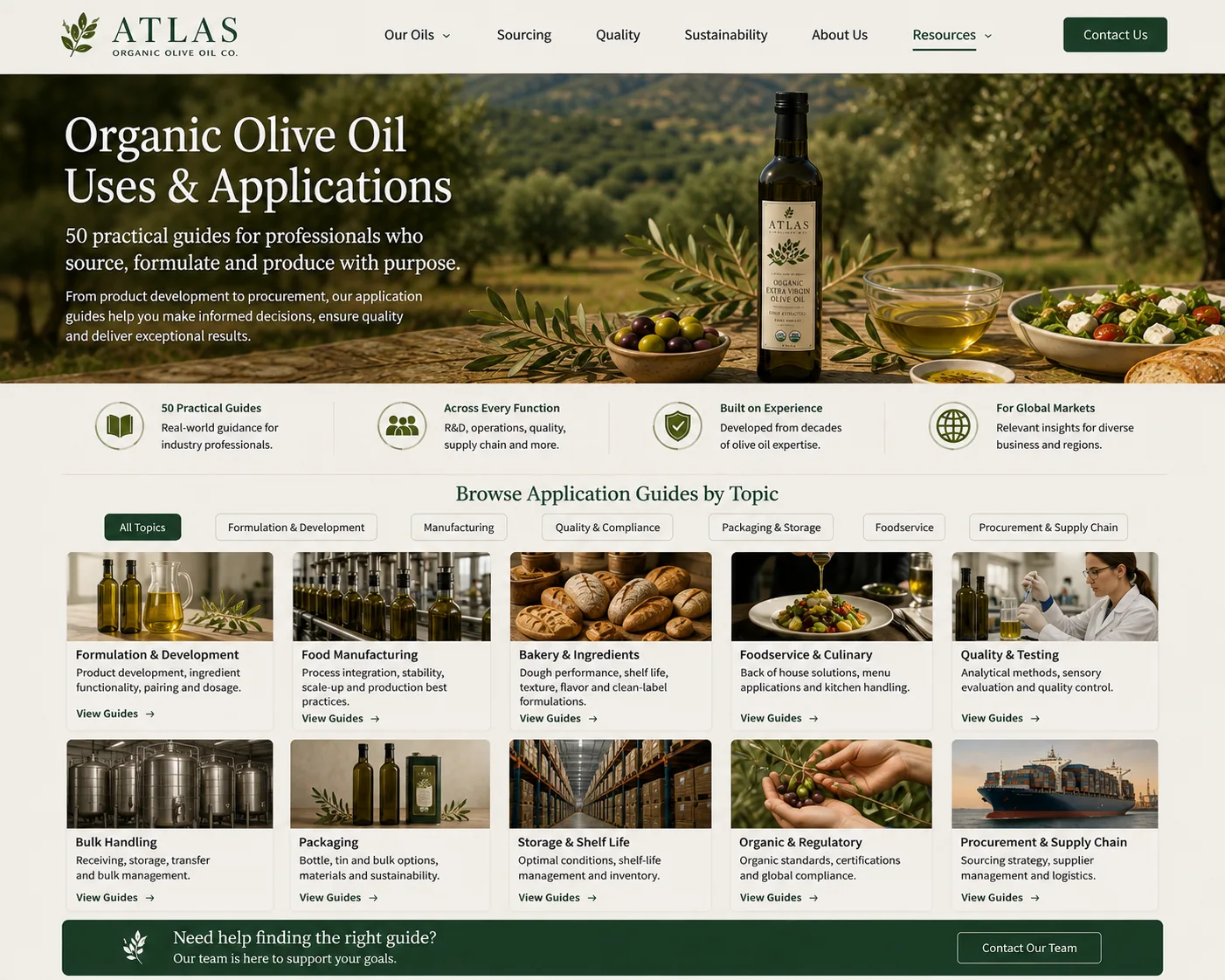
Use these guides to ask better technical questions, write clearer specifications and protect olive-oil quality through formulation, processing, packing, storage and distribution.
The library covers both product-development and supply-chain decisions. Some articles focus on how organic extra virgin olive oil behaves in finished foods, while others address purchasing, certification, analytical review, bulk storage, packaging or inventory management.
Build a practical ingredient brief around application, sensory direction, analytical requirements, organic status, packaging and repeat supply.
Read guideConsider flavor contribution, emulsion behavior, oxidation, ingredient interaction, package choice and finished-product validation.
Read guideReview oil flavor intensity, emulsion structure, oxidation control, processing conditions and the effect of formulation on finished sauce quality.
Read guideExamine oil selection alongside herbs, oxygen exposure, color stability, processing, packaging and refrigerated or ambient distribution requirements.
Read guideBalance flavor, texture, mouthfeel, ingredient compatibility and oxidative protection in commercial dip and spread formulations.
Read guideEvaluate olive-oil flavor, thermal processing, recipe balance, package interaction and the requirements of ambient or refrigerated sauce programs.
Read guideConsider oil flavor, coating performance, acidity, herbs, spices, emulsification and the stability of finished marinades and glaze systems.
Read guideUnderstand how olive oil contributes flavor and mouthfeel while interacting with heat treatment, other fats, ingredients and final packaging.
Read guideMatch oil selection to process temperature, sensory target, frozen or chilled distribution, reheating and intended finished-product shelf life.
Read guideReview dough handling, flavor, surface application, process heat, scaling considerations and the role of oil in finished pizza and flatbread quality.
Read guideExplore incorporation levels, dough behavior, crumb and crust characteristics, flavor contribution and finishing applications in commercial baking.
Read guideConsider flavor compatibility, fat substitution, mixing behavior, texture and product-specific validation when using olive oil in sweet bakery formulas.
Read guideEvaluate dough handling, flavor, bake performance, surface oil, crispness and packaging requirements in shelf-stable savory bakery products.
Read guideUnderstand how olive oil can influence dough handling, flavor, process behavior and finished-product positioning in pasta and noodle applications.
Read guideConsider coating level, roasting performance, flavor, oxidation, cooling, packing and final product storage in vegetable and antipasti production.
Read guideReview formulation, filling, thermal processing, package headspace, product-to-oil ratio and storage conditions in shelf-stable vegetable products.
Read guideExamine oil flavor, seafood compatibility, filling ratios, processing, packaging and quality protection in premium preserved seafood applications.
Read guideConsider mouthfeel, oil phase behavior, flavor intensity, emulsion design and shelf-life validation in commercial plant-based spreads.
Read guideEvaluate sensory profile, emulsion stability, interaction with proteins and hydrocolloids, processing conditions and storage requirements.
Read guideReview application rate, adhesion, flavor delivery, spraying or tumbling systems, oxidation and packaging for seasoned snack production.
Read guideConsider processing, freeze-thaw behavior, reheating, flavor retention and package selection when olive oil is used in frozen prepared foods.
Read guideDevelop practical operating controls around heat exposure, batch size, oil usage, replenishment and consistent flavor in high-volume kitchens.
Read guideReview oil selection, fryer management, temperature control, turnover, filtration practices and foodservice operating considerations.
Read guideConsider ingredient quality, sensory intensity, process compatibility and market-specific regulatory requirements in age-targeted food formulations.
Read guideSeparate ingredient selection from finished-product claims and align formulation, evidence, labeling and regulatory review with the target market.
Read guideCoordinate oil specification, bottle format, labeling, organic documentation, case packing, forecasts, launch timing and recurring supply.
Read guideMatch container size to kitchen throughput, handling, dispensing, turnover and protection from unnecessary oxygen, light and contamination.
Read guideCompare common bulk formats according to shipment volume, handling infrastructure, contamination control, oxygen management and destination needs.
Read guideBuild a receiving process around seal checks, lot identity, documentation, condition, sampling, specification review and controlled unloading.
Read guideUnderstand how analytical values fit together and how a current certificate of analysis can support commercial qualification and receiving controls.
Read guideUnderstand what free acidity measures, what it does not measure and why buyers should avoid treating one analytical value as a complete quality profile.
Read guideReview the role of peroxide value in quality assessment and why interpretation should consider lot history, storage and other analytical information.
Read guideLearn how ultraviolet absorbance measurements are used within broader olive-oil analytical evaluation and commercial specification review.
Read guideUnderstand why sensory assessment matters alongside chemical testing when evaluating extra-virgin classification and product suitability.
Read guideCompare appearance, suspended material, stability considerations, storage needs, turnover and commercial positioning for filtered and unfiltered oils.
Read guideCompare harvest maturity in terms of sensory character, oil yield, product positioning and the commercial objectives of different programs.
Read guideReview oxygen, light, heat, metals, storage, packaging and inventory practices that can influence oxidative quality loss through the supply chain.
Read guideDevelop practical storage controls that avoid unnecessary heat while also considering handling, container choice and local warehouse conditions.
Read guideCompare packaging decisions through the primary functions of barrier protection, container integrity, handling, turnover and product preservation.
Read guideReview how tank headspace and inert-gas practices may be incorporated into professional bulk storage and transfer procedures.
Read guideUse disciplined inventory practices to protect lot identity, support traceability, manage age profiles and reduce unnecessary storage time.
Read guideDesign validation around the complete finished product, including recipe, processing, packaging, distribution and intended storage conditions.
Read guideKeep organic identity connected to certification scope, lots, transaction records, storage, packing and commercial documentation.
Read guideStructure lot coding and recordkeeping so incoming oil, storage, packing, shipment and customer records can be connected efficiently.
Read guideConsider receiving, storage, transfer, contamination risks, equipment, sanitation and supplier controls within the facility’s food-safety system.
Read guideReview the need to align product identity, organic claims, labeling information and supporting documentation with applicable U.S. requirements.
Read guideReview product presentation, organic status, labeling responsibilities and destination-market verification for olive oil sold in the European Union.
Read guideStructure supplier review around quality systems, certification, analytical capability, traceability, packaging, logistics and commercial reliability.
Read guideTranslate intended use into measurable analytical, sensory, organic, packaging, documentation and delivery requirements for procurement.
Read guideTurn environmental and supply-chain objectives into documented questions covering sourcing, resources, packaging, traceability and continuous improvement.
Read guideTell us the application, destination market, annual volume, pack format and sensory or analytical target. Those inputs immediately narrow the sourcing path and help separate essential requirements from optional preferences.
A useful brief does not need to be a finished technical specification. Even approximate information about how the oil will be used and where it will be sold can help identify the most relevant product style, documentation and commercial format.
Define whether the requirement is for retail, dressing, bakery, sauce, prepared foods, foodservice, frying, manufacturing, private label or another ingredient application.
Describe the intended category, sensory direction, harvest style, filtration, analytical requirements and organic documentation needed for the program.
Include estimated volume, preferred pack, destination, incoterm, replenishment pattern, trial requirements and expected launch or delivery timing.
The most useful outcome from a technical guide is often a better question, a clearer specification or a more disciplined validation plan.
Start with the practical issue you need to solve: formulation, supplier qualification, storage, packaging, analytical review, traceability, foodservice use or another operational requirement.
Convert the key considerations into measurable product, documentation or process requirements that can be discussed with suppliers, laboratories, quality teams and operations.
Confirm performance in the actual recipe, equipment, package, storage environment and distribution conditions relevant to your finished product or commercial program.
It is written for food manufacturers, product developers, quality teams, procurement professionals, private-label operators, foodservice groups, distributors and buyers who need practical olive-oil guidance. Different articles address formulation, packaging, quality control, storage, certification, traceability and sourcing so users can focus on the part of the supply chain most relevant to their role.
No. They are intended as practical commercial and technical guidance. Product classification, laboratory interpretation, organic claims, food-safety decisions, process validation and label compliance should be confirmed with qualified laboratories, certifiers, food-safety professionals or regulatory specialists for the relevant product and destination market.
These factors can contribute to oxidative quality loss, so they repeatedly influence olive-oil handling. Package barrier performance, tank headspace, warehouse conditions, transportation, open-container exposure and inventory turnover can all affect how successfully oil quality is preserved after production.
Yes. A finished food should be evaluated in its actual recipe, process, packaging system, distribution environment and intended storage period. Olive oil is only one component of the final system, and ingredient-level assumptions cannot replace product-specific validation.
Yes. Use the contact form and share your application, target volume, destination, preferred pack format, organic requirements, intended quality or sensory profile and timing. We can use those commercial inputs to help frame the relevant product and sourcing discussion.
Share your application, oil style, certification requirements, preferred format, expected volume, destination and timing to turn technical guidance into a practical sourcing brief.
Share your target format, annual volume, destination market and timing. We will route the inquiry to the right sourcing desk.
Your message has been sent. We are returning you to the home page.